Short range of the remote controls – a problem with the receiver / remote control function.
Short range of remote controls – solutions.
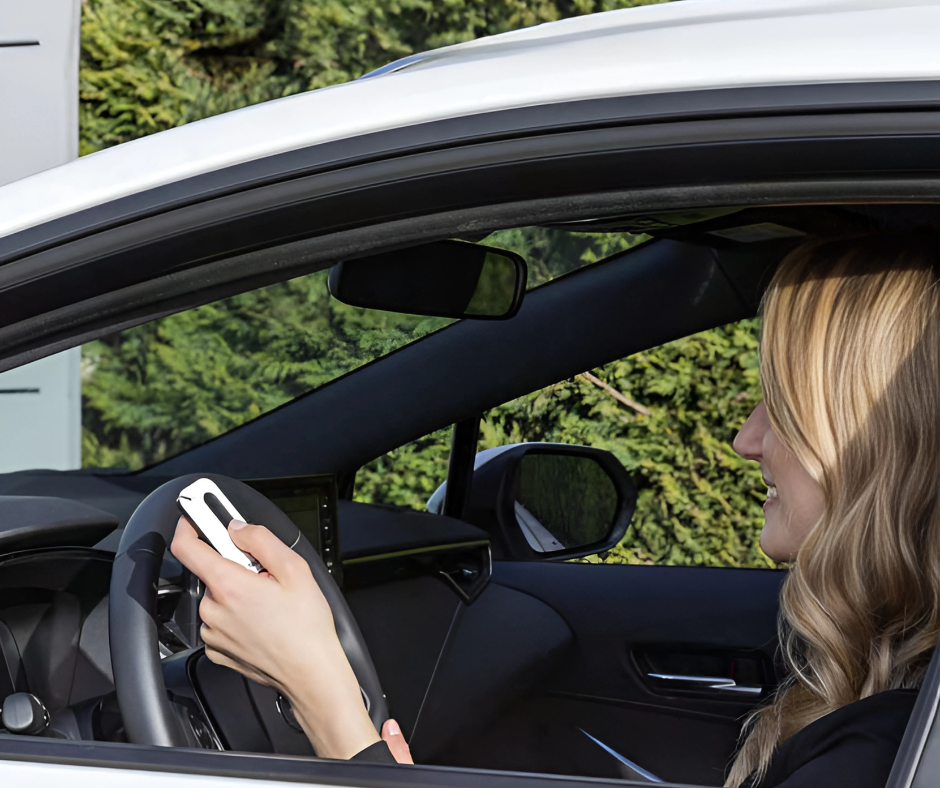
Short range of remote controls may be caused by obstacles in the area, or by the receiver being located in an environment where radio signal transmission is subject to interference. Even in standby mode, your receiver may pick up rolling codes from other devices transmitting on the same frequency (for example, a thermostat, weather station, alarm, wireless doorbell, keyless car entry system, and others). This interference from other wireless devices can cause the remote controls to have a short range.
To start, check whether all the gate remote controls you have have the same short range, or whether it affects only some of them. If they all behave the same way (similarly), the problem is probably caused by the environment.
Possible solutions:
Antenna
Connect an antenna. It can be purchased separately (e.g. NICE ABF) or is built into the warning light (ELDC, ELAC).
If you already have an antenna, check its connection. If possible, connect it directly to the receiver according to these instructions.
Check that the antenna cable is not damaged. Use 50-ohm shielded coaxial cable (type RG58).
Changing the receiver
Note: replacing the receiver will render your existing short-range remote controls unusable. Of these two solutions, LoRa® technology is more likely to solve the problem.
Replace the receiver with OXILR and the remote controls with ON3ELR featuring LoRa® (Long Range) technology, with a range of up to 1 kilometre. ON3ELR remote controls are particularly suitable for locations with high levels of radio signal interference. You will need to purchase a new receiver and new remote controls. The OXILR receiver can also be connected as an external receiver to drives from any other brand; the ideal kit for this is the NICE ONELRKIT.
Replace the receiver with OXIFM and the remote controls with ON2EFM operating at 868.46 MHz (a different frequency from standard remote controls). You will need to purchase a new receiver and new remote controls.
What next?
You can also try to find the source of the signal interference by looking around your home and asking your neighbours, to see if you can identify which device is occupying the frequency.
To test your theory, send us your receiver together with the transmitters to us. We will test the receiver in our own environment and let you know the result. In our experience, the problem is likely to be caused by the environment. Please include your mobile number and any relevant information in the package.
If you need advice on any issue, we’ll be happy to help.
Would you like more inspiration? Read more about all the ways you can control the drive, which are available to you.