How to choose a swing gate operator?
How to choose a swing gate operator
Swing gate automation is made up of two main components: the control unit and the gate operator (arm). The gate operator consists of the arm, which we classify according to how the gate opens and the forceit can exert. Control unit (or control panel) instructs these operators to operate. Additional devices and controls are also installed in the control unit.
In this article, you'll learn about:
Nice swing gate operators. What types of operators are available?
Depending on their design, Nice swing gate operators can be divided into 3 types: linear operators, underground operators and articulated-arm operators (lever-arm) operators.
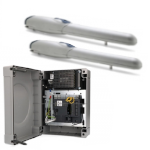
The range of linear operators consists primarily of the Wingo and Toona operator families. These two models work in the same way. The operator contains a threaded rod and a nut, which moves in and out to open and close the gate. The main differences between these operators are their force, appearance and accessory connection options (Wingo uses conventional wiring, while Toona uses BlueBUS technology, which connects each accessory to the MC824H control unit using only a two-core cable).
The third family of linear operators is TOO. This operator range uses a piston to open and close the gate.. As the operator works, you can see the piston gradually extend and open the gate.
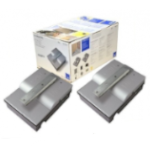
Underground operators are the most aesthetically pleasing option.. Small, concealed units are installed in the ground and, despite their small lever arm, can open large, heavy gates. These operators also serve as the bottom hinge for the gate. The most powerful underground operator can easily handle a gate with a maximum weight of 900 kg or a maximum width of 5 metres. With this type of operator, however, you need to account for the necessary ground preparation.. Ideally, prepare the site in advance.
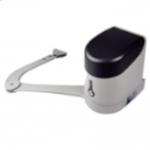
Articulated-arm operators are also an attractive solution.. Since the operator is mounted away from the gate, with only its arm attached to the gate,the movement is provided by the articulated arm, which opens and closes the gate with ease.
How do you choose an operator? What you need to know
Before you start choosing an operator, answer these 5 basic questions. This will give you a better idea of which operator is right for your gate.
1) Single-leaf or double-leaf operator?
Do you want to open both gate leaves or just one? In some cases, customers only need to open one leaf. Of course, double-leaf operators for both gate leaves are the most common.
2) What are the dimensions of the gate leaf? Width and weight.
We primarily classify the operators in our range according to the gate leaf they can handle. For each operator, you'll see specifications such as “3m/500kg” or “7m/1700kg”. These figures indicate the maximum limits the operator can handle—either the width in metres or the weight in kilograms. Each operator has a chart for calculating its limits, which will tell you straight away whether it's suitable for your gate.
3) Will wind be a problem for the gate? Gate infill and wind exposure.
To determine the right operator accurately, we also need to know the gate infill and the local wind conditions. A solid gate infill can act like a “sail” and create resistance in stronger winds. Keep this in mind; when choosing an operator, we recommend opting for a more powerful model.
4) How often will you open the gate? Opening frequency.
The number of cycles the operator performs is another factor in choosing the right operator. In short, the more cycles, the better the operator should be. Each operator also has a service-life chart that lets you estimate its lifespan based on the number of cycles.
5) A less powerful or more powerful operator? Choosing the operator's power rating: 24V / 230 V.
Based on the previous questions, we can determine whether a standard operator will be enough or whether you'll need a more powerful one. If you have a straightforward gate that doesn't offer much resistance when opening, you can choose a 24V operator. These are also designed for a high number of opening cycles. However, if your gate resists wind or there are other conditions that could cause the operator to overheat, we recommend robust, powerful 230V operators.
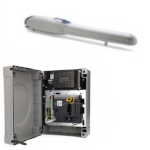
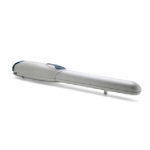
Our discounted kits
If you already know what type of operator you want (standard, underground, articulated-arm) and understand the key points for choosing an operator, you can choose one of our discounted kits. These kits are put together based on our customers' most common orders and requirements.
We offer each operator in 3 kit options. These options differ in the accessoriesthey include. The basic kit includes the operator, control unit, receiver and transmitter, while the other kits also include photocells or a warning light.
Every package includes brackets for attaching the arm to the gate.
Operator control options
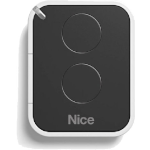
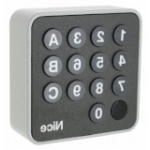
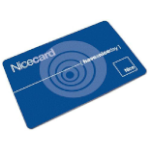
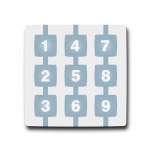
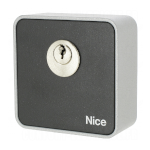
The operator is an electronic device, usually controlled with a standard remote control. However, various other control options are also available, such as a keypad, card reader, automatic timer, key switch or mobile phone control via a missed call or an app.
It's also worth noting that the operator is a non-reversible device.. In practice, this means you can't force the gate open by hand, so the operator also acts as a lock. The package also includes a release key that disengages the gearbox, allowing you to open the gate easily. This is mainly used in the event of a power outage..

Accessories for swing gates and pedestrian gates
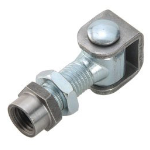
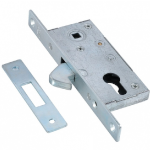
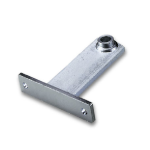
Our range also includes spare parts and specialist accessories for swing gate operators. These include weld-on brackets, electric locks, various gate stops, a folding mechanism for multi-leaf gates, and backup power supplies.
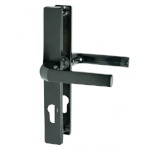
As well as gate operators, we also offer a complete range of accessories for gates and pedestrian gates. Primarily hinges, locks, lockable profiles, handles and pull handles.