What types of gates are there? Comparison of sliding gates
Cantilever, track-mounted and suspended gates
A sliding gate is a gate that opens and closes by sliding. These gates are divided into three types: cantilever, track-mounted and suspended.
 |
 |
 |
| Cantilever gate | Track-mounted gate | Suspended gate |
Cantilever sliding gate
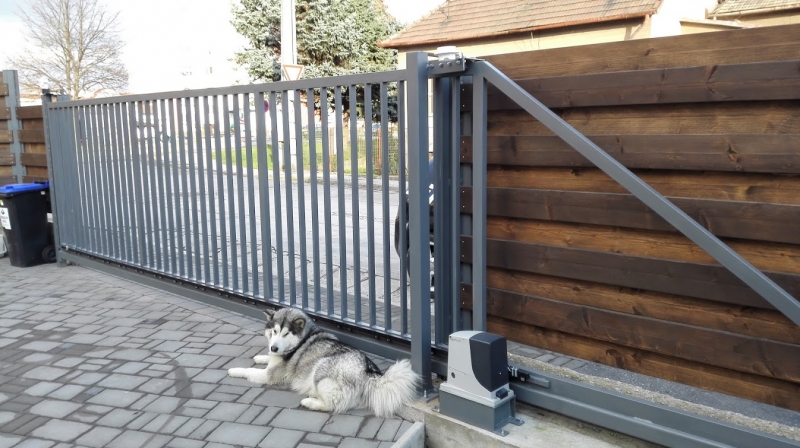
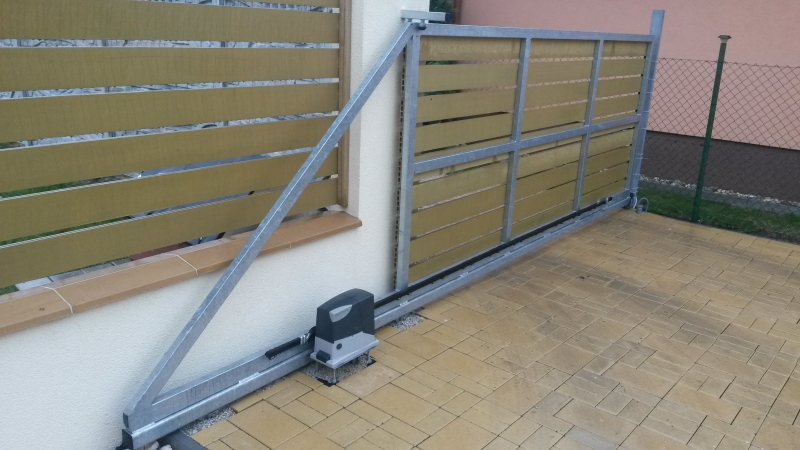
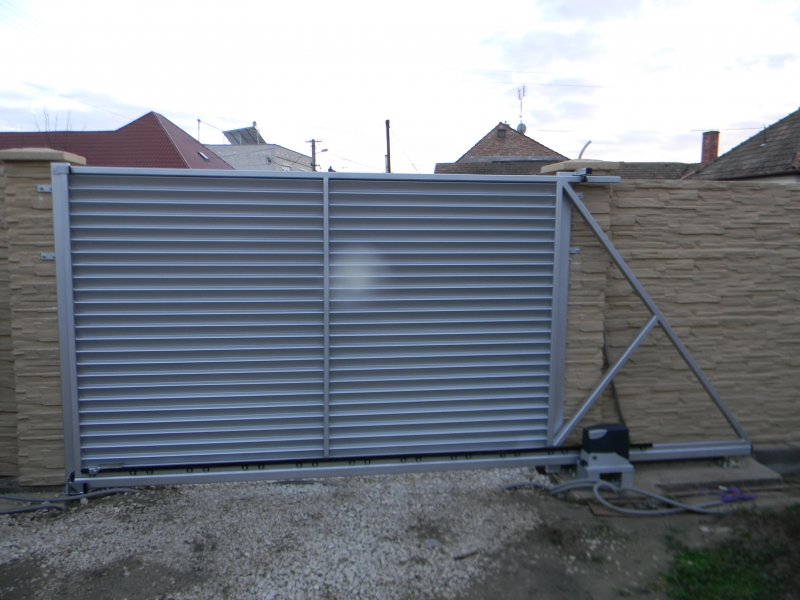
Today, the cantilever gate is one of the most widely used and most modern ways to open a gate.. The anchoring mechanism (support carriages) is located outside the opening, and the load-bearing C-profile, to which the gate frame is welded, runs a few centimetres above the ground (approx. 10 cm). This makes low-maintenance operation one of the gate’s main advantages.
Other advantages include
- low-maintenance operation – the lowest maintenance requirements of all gate types
- reliable operation in winter
- no modifications to the driveway
- long service life
- sliding system anchored outside the opening
On the other hand, a cantilever gate requires more space than other types. To estimate the total space required, add the space needed to slide the gate open to the width of the opening. Calculate this by multiplying the opening width by a factor of 1.4.
Example: If your opening (the distance from post to post) is 4 metres, you will need a total of 4 × 1.4 = 5.6 metres (for the gate to slide open) + 4 metres (opening) = 9.6 metres in total for a cantilever gate.
The gate needs what is known as a counterbalance section (often visible as a sloping section at the end of the gate). Technically, however, this section does not perform any balancing function. This section is needed because the support carriages are located outside the opening and the gate needs something to slide along.
Did you know…?
Sliding-gate components can be used to move more than just gates. One popular use for this system is covering a swimming pool, which can also create a movable terrace. See this solution here: Swimming pool cover with a sliding system.
 |
 |
 |
Track-mounted sliding gate
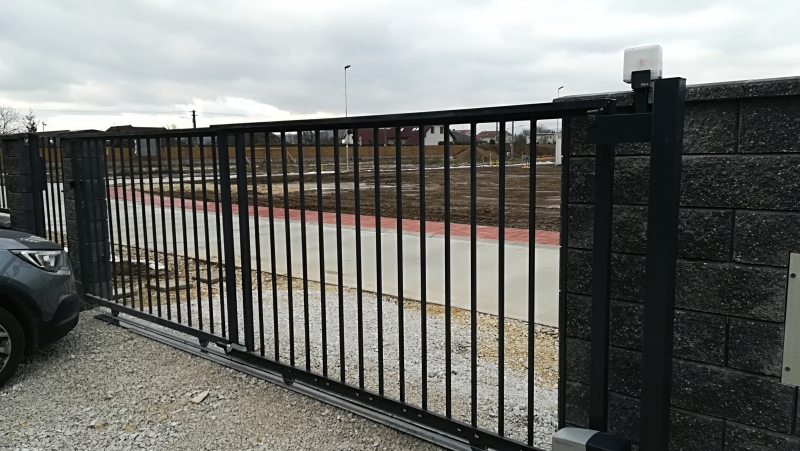
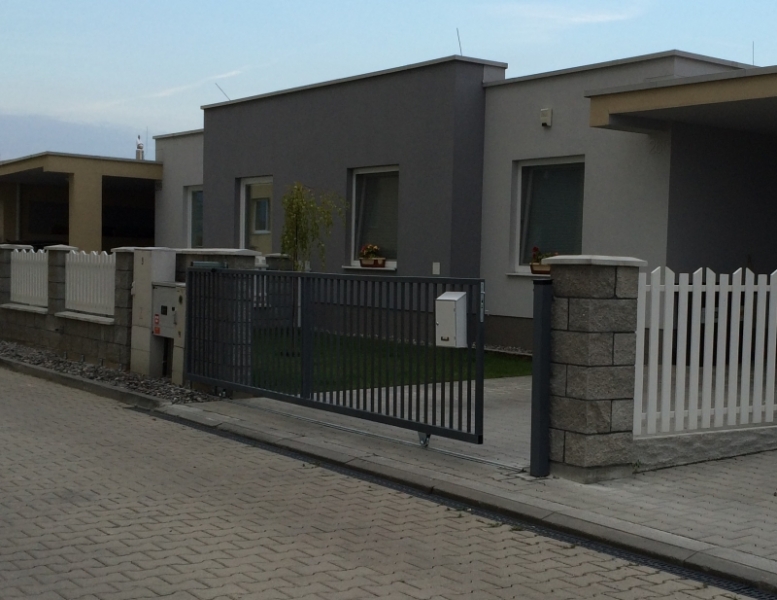
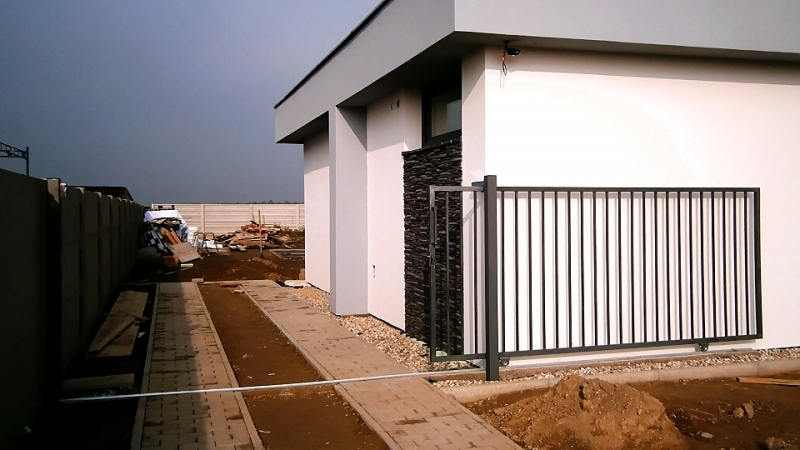
As the name suggests, track-mounted gates need a rail to slide along.. The rail can be U-shaped or V-shaped. We also offer wheels for both types, which are screwed (or welded) directly to the bottom of the gate. The gate then runs along the rail on these wheels.
This type of gate has lower upfront costs and requires less space. Other advantages include:
- lower purchase price
- less space required – the space needed to slide the gate open is the same as the opening width (+30 cm for overlap)
- no need to excavate foundations, unlike for the support carriages of a cantilever gate
- long service life
However, the gate requires some maintenance. Nothing should obstruct the wheels as they run along the rail – no small stones or ice in winter.
It is easy to work out how much space a track-mounted gate needs. The space needed to slide the gate open is the same as the width of the opening..
Example: If your opening (the distance from post to post) is 4 metres, you will need a total of 4 metres (for the gate to slide open) + 4 metres (opening) + 30 cm (overlap, clearance) = 8.3 metres for a track-mounted gate.
 |
 |
 |
Suspended sliding gate
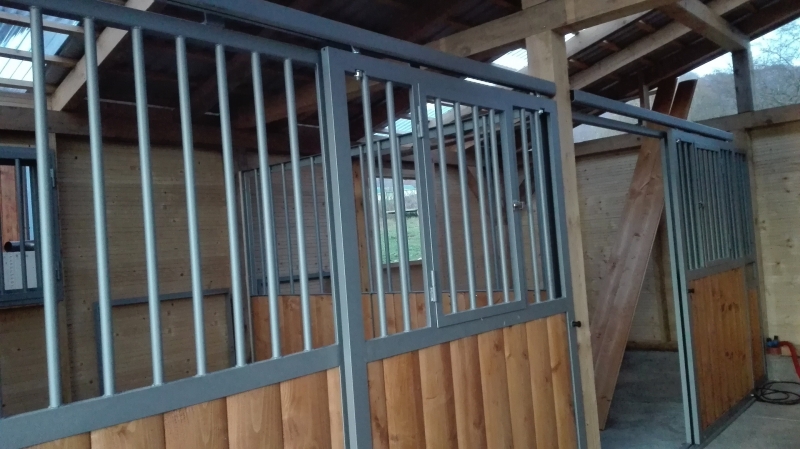
A suspended gate is not a typical entrance gate, but is often used as a screen or sliding partition, sliding door in various sheds and outbuildings, as well as warehouses and industrial buildings.
The load-bearing C-profile and guide carriages are located at the top of the structure.. The C-profile can be secured with top or side brackets. The carriages (with 2 or 4 rollers) run inside the C-profile and are mounted directly on the gate or door that is to be opened (slid aside). At the bottom, there are only stops and auxiliary guide rollers.
The main advantages of this overhead system include:
- lower purchase price
- easy installation
- a wide range of possible applications
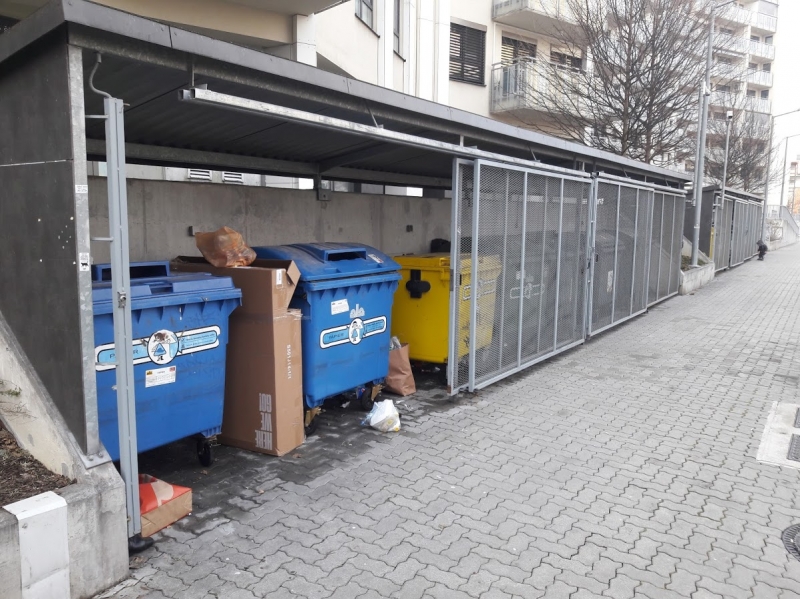
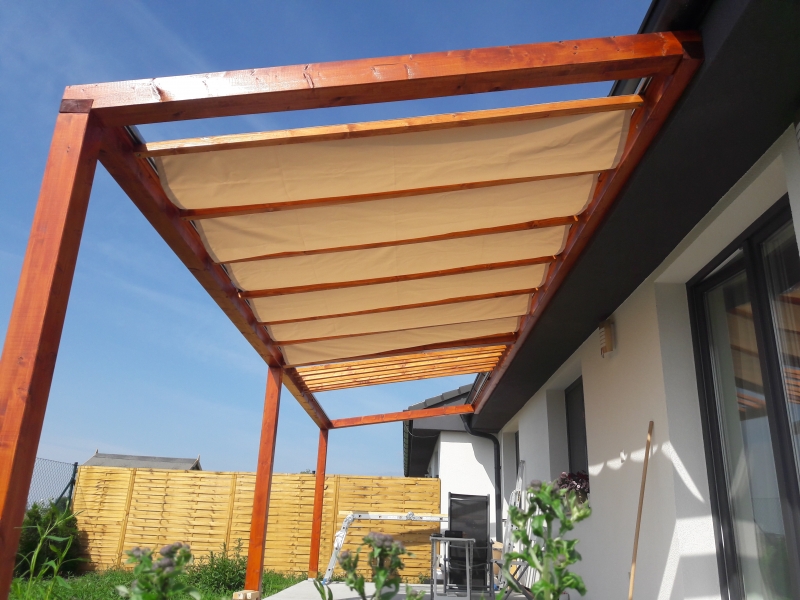
There are many ways to use a suspended system.. Our customers have used suspended systems to create, for example: security for container areas, entrance to a horse stable or sliding terrace cover.
 |
 |
 |